Texas Biomed through the Decades
1940s
- December 16, 1941 – Tom Slick, Jr., at the age of 25, establishes The Foundation for Applied Research with the mission to provide fundamental research and advanced education in agricultural research, the natural sciences and medicine. This is just days after the attack on Pearl Harbor drawing the U.S. into World War II and Slick volunteers to serve in the U.S. Navy.
- The Foundation holds its official opening in 1947, the same year Slick establishes sister institute Southwest Research Institute.
- Early research is carried out in a historic farmhouse and farm buildings, with a focus on biology and agriculture.
1950s
- Renamed Southwest Foundation for Research and Education
- First research grants are received from National Institutes of Health for studying cancer and heart disease.
- Betty Slick Moorman, Tom’s sister, begins a dues-paying private dinner club now known as The Argyle that is dedicated to supporting the Foundation’s research.
- Baboon colony is established to support heart disease research.
1960s
- Tom Slick, Jr. dies in a plane crash at the age of 46. The Board of Governors pledges steadfast support of the Institute and carrying out Tom’s vision.
- Campus facilities rapidly expand and staff grows to more than 200.
- Research advances understanding of heart disease, cancer, hormones, birth control, human development, viruses, parasites and much more.
- Recognized as a scientific leader pioneering the baboon as a model for biomedical research. Establish chimpanzee breeding colony, with emphasis in cancer and hepatitis research.
1970s
- The Institute leads large studies of oral contraceptives in San Antonio, across the U.S. and Mexico, and researchers study variations in contraceptives in Southeast Asia.
- Researchers advance understanding of aging, cholesterol, hypertension, cigarette smoking effects and environmental pollutants. They investigate the links between viruses and cancers and search for the cause of multiple sclerosis.
- The Southwest Foundation Forum, a women’s group now called the Texas Biomedical Forum, is established in 1970 to promote and fundraise for the Institute. The Golden Circle is established in 1977 to increase philanthropic support from individuals and businesses.
1980s
- A newborn child suffering from a severe respiratory disorder was saved after being put on ventilation therapy that was developed and first tested on premature baboons at the Institute.
- The world’s first nonhuman primate birth from in vitro fertilization occurs at the Institute. The baboon is named E.T., short for “Embryo Transfer.”
- Researchers test Hepatitis B vaccines and begin studying a newly emerged disease: AIDS.
- Renamed Southwest Foundation for Biomedical Research
1990s
- Geneticists collaborate with UT Health to launch the San Antonio Family Heart Study, which lasts for more than a decade and involves more than 40 families and 1,400 participants – one of the largest studies of its kind to look for genetic drivers of heart disease in Mexican Americans. Throughout the long-running study, the team identifies more than 20 genes that influence cholesterol, insulin, glucose, leptin and more.
- Researchers develop a genetic analysis software program called SOLAR that becomes used by scientists around the world.
- The Southwest National Primate Research Center is established at Texas Biomed, now one of seven federally designated centers dedicated to supporting the nation through ethical and humane biomedical research in nonhuman primates.
2000s
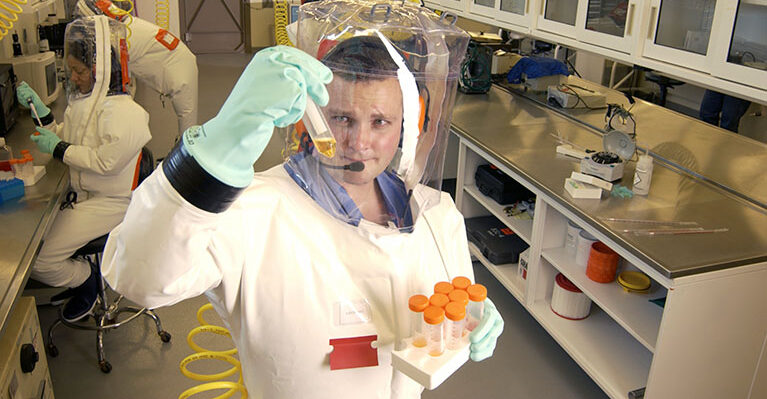
- The Institute begins work in its newly constructed high containment lab – the first privately owned and operated biosafety level 4 facility in the nation. The Institute becomes part of national biodefense networks studying anthrax and hemorrhagic fever viruses, such as Ebola virus and Lassa virus.
- Researchers identify genes involved in alcoholism, diabetes, osteoarthritis, lupus, hemostasis, mitochondrial dysfunction and inflammation, as well as malaria parasites’ genetic basis of resistance to antimalaria drugs.
- A variety of Hepatitis C treatments are tested that contribute to medications now available that cure the disease within 8 to12 weeks.
2010s
- Renamed Texas Biomedical Research Institute (Texas Biomed)
- Laboratory and office facilities expand significantly with the 70,000 sq. ft. Earl Slick Research Center, named after Tom’s brother and longtime trustee, and a new biosafety level 3 lab.
- Researchers test what would become the world’s first FDA-approved Ebola therapy for partner Regeneron.
2020s
- The Applied Science and Innovation unit is established to grow contract science with pharmaceutical companies, the U.S. government and foundations.
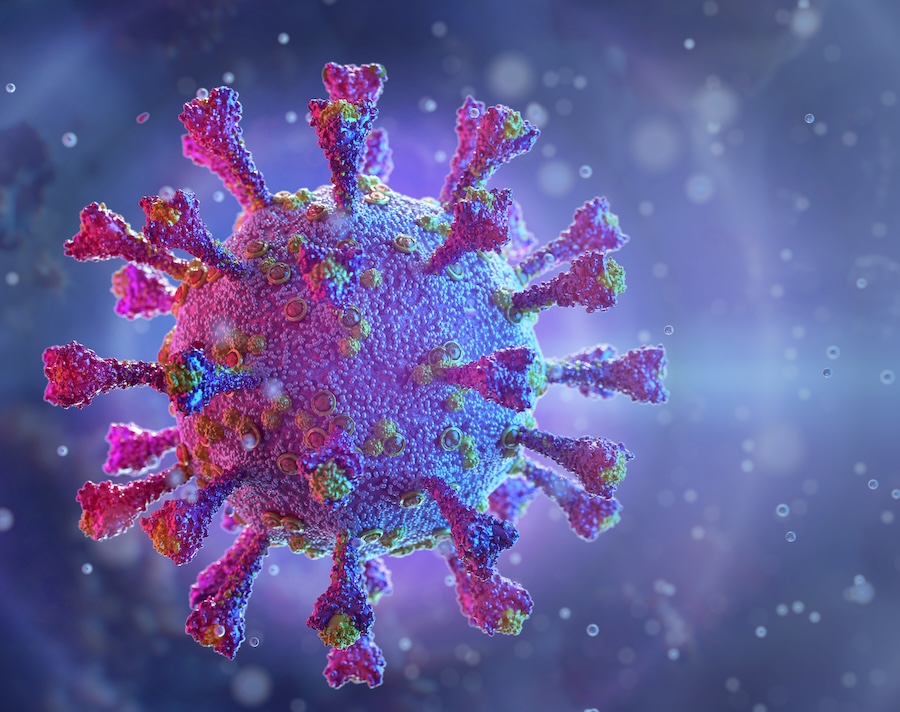
- The Institute makes a significant contribution to the COVID-19 pandemic by swiftly establishing animal models to test vaccines and therapeutics. Researchers test several that go on to save millions of lives and help curb the pandemic, including Pfizer-BioNTech’s COVID-19 vaccine, Novavax’s COVID-19 vaccine and Regeneron’s monoclonal antibody cocktail.
- Major modernization of campus facilities as part of 10-Year Strategic Plan. More construction occurring simultaneously than at any other time in our history.