San Antonio, TX, April 10, 2026 – Texas Biomedical Research Institute proudly opened its new, state-of-the-art Health Center, a cornerstone investment delivering on its long-term strategic plan to accelerate next-generation biomedical research aimed at solving some of humanity’s greatest health challenges.
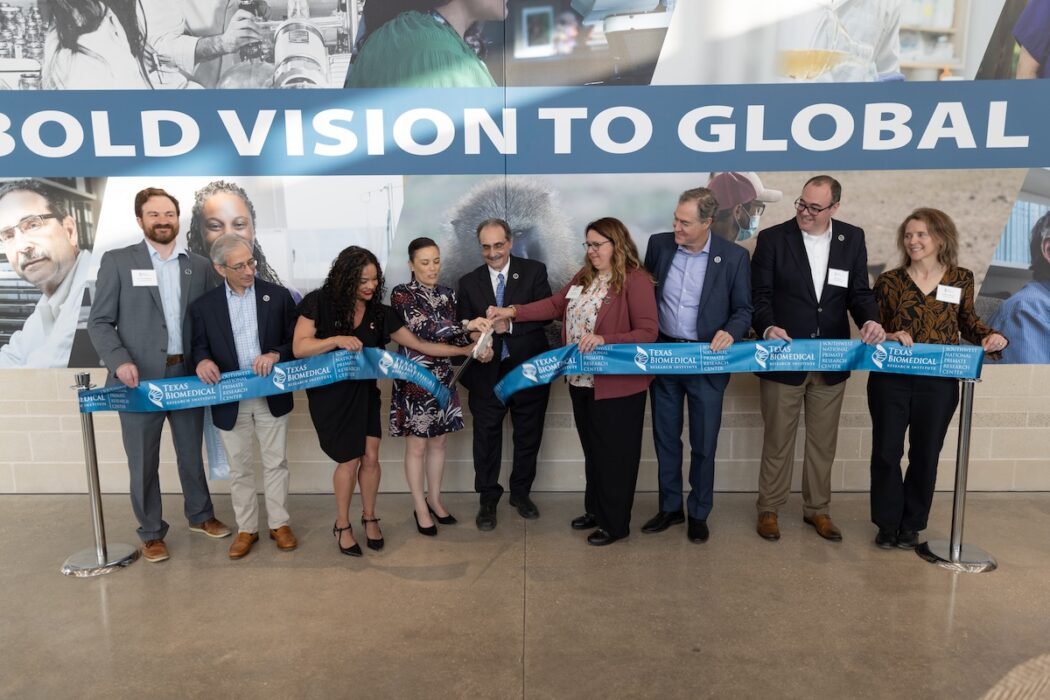
The ribbon-cutting ceremony was attended by distinguished guests and leaders, including Mayor Gina Ortiz Jones, State Rep. Josey Garcia and Craig Boyan, Chairman of the Texas Biomed Board of Trustees.
The new 18,000 square-foot center is a key element of Texas Biomed’s ongoing campus transformation, which includes enhanced cyber and electric grid infrastructure and expanded high-containment research capabilities.
“With this new facility, we are enabling the visionary science that’s protecting communities, strengthening our national security and accelerating lifesaving discoveries,” said Larry Schlesinger, M.D., Texas Biomed President and CEO.
The center opening took place as Texas Biomed marks its 85-year anniversary. Since its founding in 1941, the Institute has helped advance the first Ebola therapy, the first COVID-19 vaccines, the Hepatitis C cure and the high-frequency ventilator saving premature babies’ lives around the world.
Texas Biomed’s ongoing campus modernization plan is designed to improve its scientific research capabilities and meet the translational needs of key partners, including the National Institutes of Health, the Biomedical Advanced Research and Development Authority (BARDA), the Department of Defense, university researchers and pharmaceutical and biotechnology industry clients.
Mayor Ortiz Jones stressed that Texas Biomed is a vital asset for protecting community and global health.
“The Institute’s level of precision, safety and expertise in studying some of the world’s most dangerous pathogens has put our city on the map as a world leader in infectious disease research,” she said. “I am also especially thankful to Texas Biomed for continuing to inspire our young people to pursue careers in science and technology.”
The Institute received almost $13 million in flow-through federal preparedness funding under the American Rescue Plan Act from the City of San Antonio and Bexar County that also allowed for major upgrades in campus infrastructure, safety and security.
The new Health Center houses biomedical labs and pathology and histology services, among other functions. It’s also a hub for modern meeting space and collaborative research at the Institute’s Southwest National Primate Research Center. Known as SNPRC, it’s one of seven such federally designated centers funded in part by the National Institutes of Health (NIH).
Primates are the gold standard research model for humans because they share more than 90% of our DNA. They’re critical in making sure that medicines, vaccines and technologies are safe and effective before they’re allowed to move into human-based clinical trials.
“The opening of the Health Center represents a major milestone for the Institute,” Boyan said. “This reflects a commitment to advancing innovative research while delivering the highest standards of care for animals.”
The facility is the flagship feature of a new, 70,000-square-foot care complex enabling scientists at Texas Biomed and SNPRC, and other research investigators nationwide to use animal models to study infectious and related chronic diseases, noted SNPRC Director Corinna Ross, Ph.D.
“Our campus is home to an exceptionally dedicated team of scientists, veterinarians, animal care specialists, pathologists and behavioral scientists who care for our primates,” she said. “This new center provides access to the latest technologies helping us answer some of the biggest questions in human health, including infectious diseases, obesity, aging and neurodegenerative conditions like Alzheimer’s and Parkinson’s disease.”
“We are excited to move into a space that not only advances our research capabilities but also reflects our deep commitment to exceptional animal care and the remarkable people who make this work possible every day,” said Dr. Ross.
The investments come at a crucial moment as global demand for infectious and chronic disease research continues to grow. Texas Biomed’s unique combination of high-containment abilities to study pathogens alongside the SNPRC positions it as a national asset, said State Rep. Josey Garcia, who represents the district.
“Facilities like this are essential to ensuring the United States remains at the forefront of research and biosecurity,” she said.
About Texas Biomedical Research Institute
Texas Biomedical Research Institute is a nonprofit research institute dedicated to protecting the global community from infectious and chronic diseases. Through basic research, preclinical testing and innovative partnerships, we accelerate development of diagnostics, therapies and vaccines for the world’s deadliest pathogens, including the first COVID-19 vaccine, the first Ebola treatment and first Hepatitis C therapy. We are passionate about educating the next generation of bioscience leaders and ensuring a healthier future for all.