This story was written and published by the San Antonio Report.
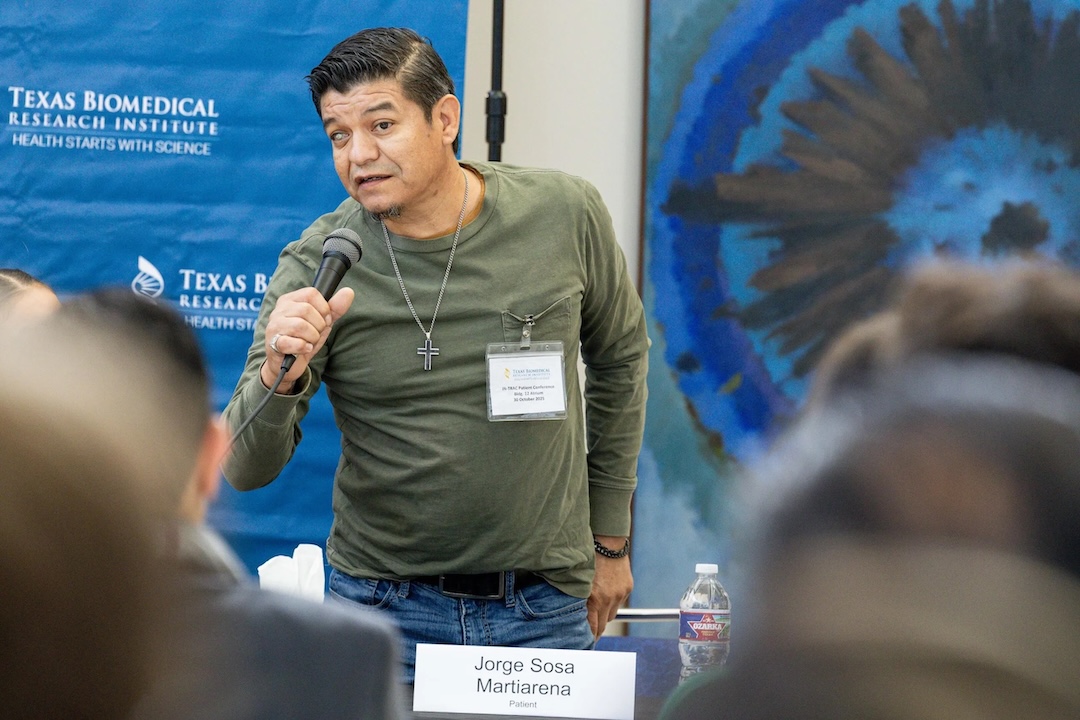
It started in March of last year.
Jorge Sosa Martiareana, a 50-year-old self-employed mechanic in San Antonio, started eating less. During visits, his mother expressed concerns about his lack of appetite and increasingly slim frame.
The weight loss was eventually accompanied by a bad cough, chest pain, night sweats and fatigue. He suffered from the mystery illness into the summer, not thinking too much of it. Maybe it was the flu or COVID-19, he thought. Maybe he was just getting older. “Mexicans never go to the hospital,” he joked.
But by November 2024, Martiareana’s weight had dropped to 104 pounds from his usual 155. “He literally looked like a skeleton with skin,” his wife, Candylove Sosa, said. One day, she found Martiareana doubled over holding his chest. It was time to go to the hospital, where Martiareana was diagnosed with tuberculosis and pneumonia.
Americans typically think of tuberculosis or TB as a disease of the past, something that affected previous generations but has since been eradicated. Though it does have a low incidence in the U.S., tuberculosis kills well over 1 million people around the world every year.
In 2024, over 10,000 cases of tuberculosis were reported in the U.S., about 1,200 of them in Texas, according to the U.S. Centers for Disease Control and Prevention. Texas has the second largest population of tuberculosis patients and has the fifth highest tuberculosis incidence rate in the country.
San Antonio is also home to the last freestanding tuberculosis hospital in the U.S. and a number of scientists researching the disease. That includes scientists at Texas Biomedical Research Institute’s IN-TRAC program, a federally-designated training ground for TB researchers.