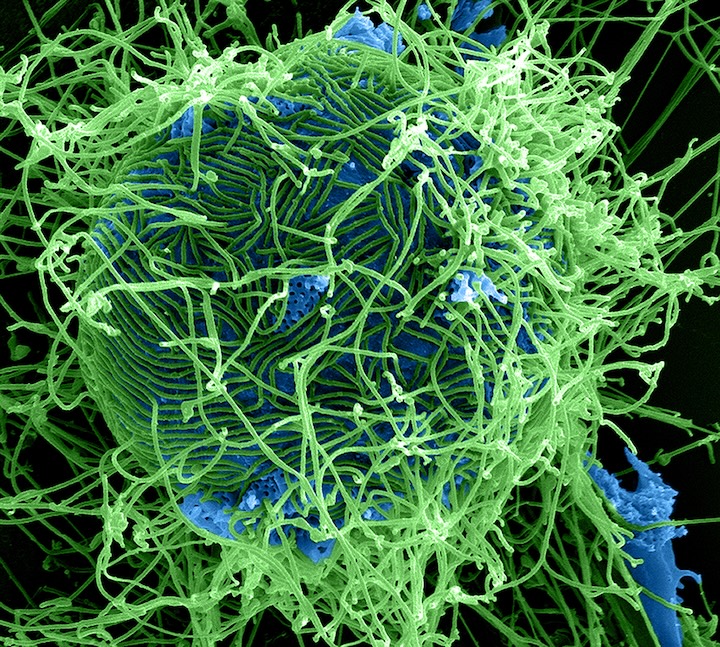
As the Bundibugyo ebolavirus (BDBV) outbreak continues to expand in Africa, killing nearly 5,000 people to date, Texas Biomedical Research Institute scientists have partnered with Regeneron to evaluate a candidate treatment using a first-of-its-kind study design, with the goal of saving the lives of infected patients.
Texas Biomed evaluated an investigational antibody therapy developed by biotech leader Regeneron against BDBV in nonhuman primates to assess its efficacy before moving into human clinical trials. The candidate molecule, named maftivimab, is the most potent neutralizing component of Regeneron’s antibody cocktail previously approved by the FDA for Zaire ebolavirus, which infected more than 28,000 people and killed over 11,000 during a 2013–2016 outbreak in West Africa.
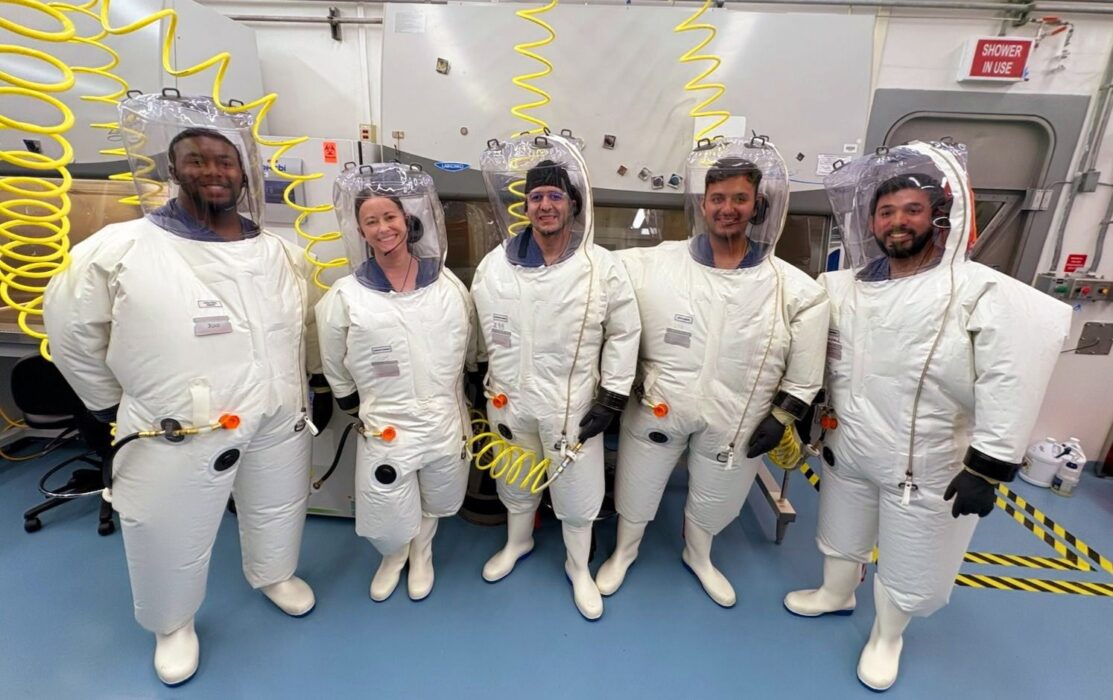
Additional laboratory analysis demonstrated that maftivimab also neutralizes Bundibugyo ebolavirus, and thus, animal studies were conducted to determine the treatment’s efficacy. This research took place in Texas Biomed’s Biosafety Level 4 (BSL-4) facility, a highly specialized lab where scientists work safely with pathogens that can cause serious or potentially lethal disease. Texas Biomed is home to the nation’s only privately owned BSL-4 maximum containment laboratory.
Clinical data from the PALM study and prior experience with Zaire ebolavirus nonhuman primate studies show that viral load is the most sensitive biomarker of mortality and of response to monoclonal antibody (mAb) therapy. To ensure proper stratification, Regeneron scientists designed a unique study, in which animals were distributed evenly into groups based on sex and viral load (the amount of virus in the blood) after BDBV infection. Texas Biomed made this possible by collecting samples early, as soon as symptoms or detectable viral load appeared, and testing them rapidly in real time, a first for a BSL-4 laboratory. This allowed the research team to match animals with highly comparable viral loads across the treatment and control groups.
“Disease progression of Bundibugyo virus in nonhuman primates is not uniform. The virus replicates faster in some animals compared to others,” explained Viraj Kulkarni, Ph.D., the study’s co-Principal Investigator and an Assistant Professor at Texas Biomedical Research Institute.
“To avoid biased grouping and favoring any particular treatment group, we measured viral titers at day 4 post infection using Reverse Transcription Polymerase Chain Reaction testing. Based on these results, we and our colleagues at Regeneron equally distributed the animals into different treatment groups. All of this was achieved in a single day, which is remarkable and has never been done in any BSL-4 facility.”
Treatment with maftivimab resulted in 100% survival among nonhuman primates in the study while five of the six control group animals were humanely euthanized when they displayed signs of significant illness due to infection. The results of this work are included in a recent preprint paper posted on bioRxiv.
“The 24-hour turnaround for quantifying viral loads in the blood of infected animals, performed by the Molecular Diagnostics Lab within Texas Biomed’s Applied Science and Innovation unit, was a unique technical feat that went well beyond normal expectations and illustrates the Institute’s commitment to quality and excellence,” explained Greg Ippolito, Ph.D., Associate Professor at Texas Biomedical Research Institute and scientific leader of the Molecular Diagnostics Lab.
“Having these results in hand allowed the animals to be stratified by low versus high viral loads. This stratification strategy also allowed us to remain within the guiding ethical principles of research “3Rs” (replacement, reduction, refinement) while ensuring the greatest possible scientific value was obtained from each nonhuman primate involved in the study,” said Cory Hallam, Executive Vice President of Applied Science and Innovation at Texas Biomed. “This work has clearly set a benchmark for future study designs.”
Regeneron announced on October 26 that, based on laboratory studies and the nonhuman primate efficacy studies conducted at Texas Biomed, maftivimab is being added to the PARTNERS (Platform Adaptive Randomised Trial for New and Repurposed Filovirus TreatmentS) clinical trial of potential Bundibugyo virus treatments. The trial is sponsored by the World Health Organization, coordinated by the University of Oxford’s Pandemic Sciences Institute, and led in the Democratic Republic of the Congo by the country’s National Institute for Biomedical Research.
About Regeneron
Regeneron (NASDAQ: REGN) is a leading biotechnology company founded by physician-scientists that invents, develops, and commercializes life-transforming medicines. Its pipeline and approved treatments target eye, allergic, inflammatory, oncological, cardiovascular, metabolic, neurological, hematologic, infectious, and rare diseases. For more details, visit www.Regeneron.com.
About Texas Biomedical Research Institute
Texas Biomed is a nonprofit research institute dedicated to protecting the global community from infectious diseases. Through basic research, preclinical testing and innovative partnerships, we accelerate diagnostics, therapies and vaccines for the world’s deadliest pathogens. Our San Antonio campus hosts high containment laboratories and the Southwest National Primate Research Center. Our scientists collaborate with industry and researchers globally and have helped deliver the first COVID-19 vaccine, the first Ebola treatment and the first hepatitis C therapy. For more information, please visit txbiomed.org or follow Texas Biomed on LinkedIn.