SAN ANTONIO (June 23, 2026) — Texas Biomedical Research Institute Assistant Professor Riti Sharan, Ph.D., has received a $4.5 million R01 grant from the National Institutes of Health (NIH) to study a promising immunotherapy for individuals affected by HIV and tuberculosis (TB).
Over the next five years, Dr. Sharan and her team will investigate whether boosting a specific immune signaling protein, called IL-21, in the lungs can help restore immune system function of individuals being treated with antiretroviral therapy for HIV and improve control of TB bacteria.
The grant builds on Dr. Sharan’s recent research findings about IL-21, including a paper published this week in JCI Insight.
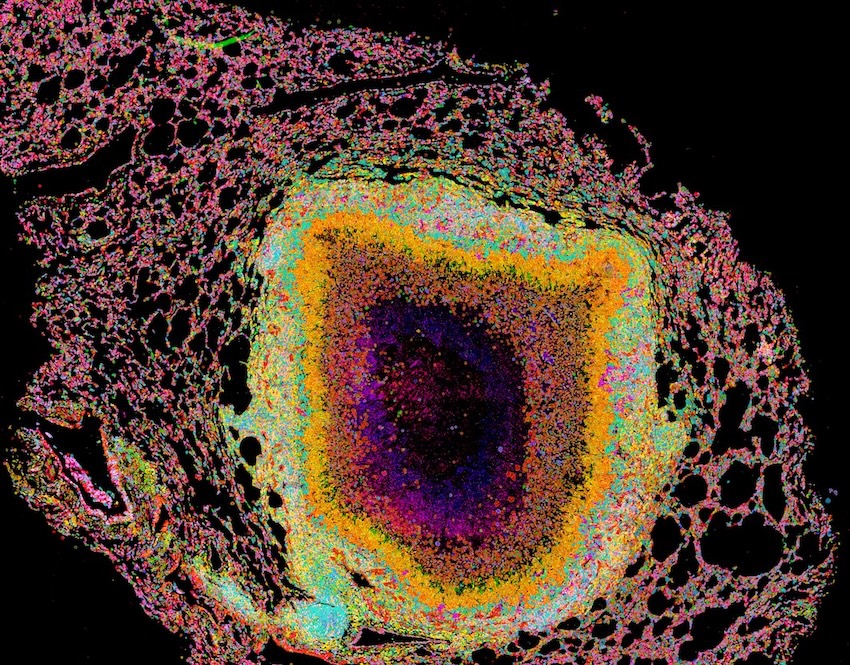
“We have found that IL-21, particularly in the lungs, remains at lower levels following HIV treatment and so restoring this important cytokine through an immunotherapy could prove to be a game changer enabling people to live longer, healthier lives,” Dr. Sharan said.
TB is the world’s deadliest infectious disease, claiming the lives of more than 1 million people a year. Millions more carry a nonactive, or latent, form of TB that does not trigger noticeable symptoms, but can reactivate later causing more serious health problems, such as difficulty breathing, severe weight loss and extreme fatigue. People living with HIV are at particularly high risk of latent TB reactivating and it has become a leading cause of death.
“While HIV and TB treatments do a good job of suppressing the virus and bacteria, the immune system never fully recovers, which may be why many individuals with HIV, even when well-managed, remain vulnerable to reinfection with TB,” said Dr. Sharan.
The work underscores the need for immunotherapies, also called host-directed therapies, that can help the immune system recover alongside the treatments targeting the pathogens themselves.
“IL-21 is being investigated as way to help fight cancer and strengthen responses to flu vaccines,” Dr. Sharan said. “We are excited to see if it can successfully restore the lung’s immune system, which could potentially benefit not only individuals facing HIV and TB, but other respiratory illnesses as well.”
This is Dr. Sharan’s first R01 grant, which are highly competitive NIH grants that enable long-term research over several years, and represents a significant milestone for her lab. Dr. Sharan has been with Texas Biomed since 2019, first as a postdoctoral researcher and then Staff Scientist in Professor Deepak Kaushal’s lab, before launching her independent lab in 2023.
“I am very grateful for the opportunity to pursue this research, which has the potential to improve human health around the globe,” Dr. Sharan said. “I also want to encourage other early career researchers to not give up – it takes resilience to secure one’s first R01 grant.”
Paper: Shivanna et al. Modulation of pulmonary IL-21 expression during latent TB and M. tuberculosis/SIV coinfection. JCI Insight, Vol. 11, Issue 12. June 22, 2026. 10.1172/jci.insight.199217
Authors include Vinay Shivanna, Renee D. Escalona, Colin Chuba, Shashi Prakash Singh, Edward J. Dick Jr., Smriti Mehra and Riti Sharan from Southwest National Primate Research Center at Texas Biomedical Research Institute; Ahmed A. Moustafa, J. Quincy Brown, Chenyao Xiao and Sangkyu Kim from Tulane University; and Mirko Paiardini from Emory University.
Video abstract for scientists: Watch Dr. Sharan highlight the main findings of the JCI Insight paper about IL-21.
Learn more: TB and HIV treatments are not enough for a full recovery